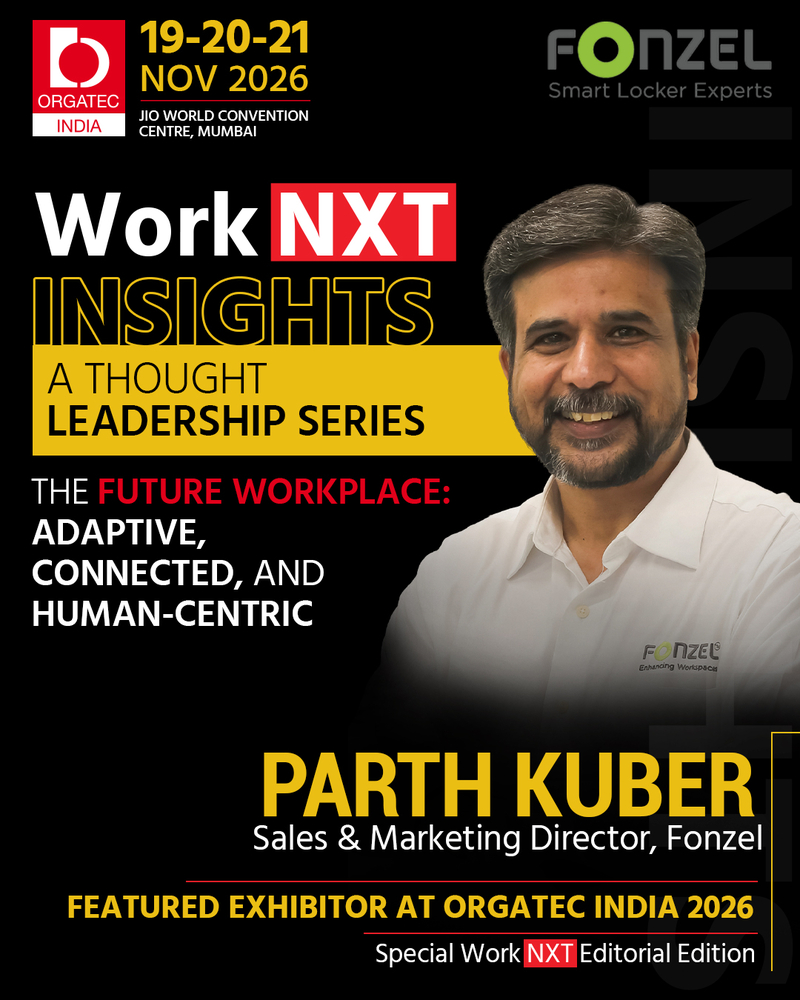


WorkNXT Insights Article
The Future Workplace: Adaptive, Connected, and Human-Centric
The biggest lesson from the past few years is this: workplaces designed for only one way of working become obsolete fast. The future belongs to spaces that can change shape without disruption - and the organisations that embrace this now will move faster and cheaper than those that don’t.
Adaptive by Design
At Fonzel, the question has shifted from “How many lockers do we need?” to “What happens when our needs change?” That’s why we build smart locker systems as modular, reconfigurable infrastructure. A recent client transitioning from dedicated desks to hot-desking reassigned the same hardware from permanent to day-use allocation with QR-based access - over a single weekend, no civil work, no new capital spend. Adaptive infrastructure protects investment, shortens decision cycles, and keeps the workplace responsive to people - not the other way around.
Connected by Default
Anything that holds something valuable - a laptop, a tool, a controlled sample, a parcel - should know what it holds, who accessed it, and when. At a manufacturing facility we work with, RFID-enabled lockers eliminated shift-changeover queues entirely and replaced paper registers with a compliance-grade audit trail. Connectivity turns storage from a cost centre into a data point: right-size your footprint, gain chain-of-custody visibility, and meet the access-log requirements now appearing in tenders as baseline, not premium.
Human-Centric at the Core
Productivity comes down to one question: does the workplace feel built for the people in it? In hot-desking environments, the absence of secure personal storage creates daily, low-grade friction. When one hybrid client added day-use smart lockers to their return-to-office redesign, helpdesk requests dropped and employee feedback was clear - the office finally felt “set up for how we actually work.”
Smart, adaptive storage is not a feature. It’s the foundation.