


WorkNXT Insights Article
Sustainability Beyond Materials: Embracing a Circular Economy and Green Building Practices
The traditional “take-make-dispose” economic model has placed significant pressure on natural resources, increased waste generation, and contributed to environmental degradation. In contrast, the circular economy promotes a sustainable approach by extending the life cycle of products and materials through reuse, repair, refurbishment, and recycling. By keeping resources in use for longer, organizations can reduce waste, conserve raw materials, lower costs, and create economic value.
Benefits of a Circular Economy
A circular economy delivers environmental, economic, and social benefits. Environmentally, it reduces greenhouse gas emissions, minimizes waste, conserves resources, and supports ecosystem restoration. Economically, it helps lower material costs, strengthens supply chain resilience, drives innovation, and creates new business opportunities. Socially, it enhances sustainability awareness and contributes to job creation.
Organizations can adopt circular economy principles by:
• Assessing operations and supply chains to identify opportunities for resource efficiency.
• Setting measurable sustainability goals.
• Collaborating with suppliers, employees, customers, and other stakeholders.
• Designing products and processes that support reuse, repair, and recycling.
ZEE’s Circular Economy Initiatives
At ZEE, business growth is closely linked with the well-being of people and the planet. The organization promotes waste reduction and resource efficiency through the procurement of sustainable and eco-friendly products. Biodegradable pantry consumables, reusable utensils, and alternatives to single-use plastics have been implemented across operations in line with Maharashtra’s plastic ban regulations.
Waste segregation at source and responsible recycling are integral practices. Wastepaper, e-waste, used oil, plastics, and metal scrap are disposed of through authorized recycling partners. Beyond recycling, ZEE supports resource conservation through treated water reuse, tree plantation initiatives, and energy conservation measures aimed at reducing dependence on non-renewable resources.
Green Building Techniques
Green building practices help reduce environmental impact while improving energy efficiency and occupant well-being. Key strategies include:
1. Reducing Environmental Impact through sustainable design, local sourcing, and recycled materials.
2. Using Green Technologies, including energy-efficient HVAC systems, LED lighting, smart controls, and indoor air quality monitoring.
3. Improving Energy Efficiency through audits, insulation upgrades, weatherproofing, and optimized building systems.
4. Selecting Renewable and Recycled Materials such as reclaimed wood, recycled plastics, bamboo, and other sustainable alternatives.
5. Promoting Natural Ventilation and Renewable Energy, including daylight utilization, solar power, and efficient air circulation systems.
ZEE’s Green Building Practices
ZEE continues to strengthen workplace sustainability through environmentally responsible infrastructure. Its corporate office in Mumbai and technology centre in Bengaluru operate from LEED Gold-certified facilities that incorporate rainwater harvesting, wastewater treatment and recycling, energy-efficient HVAC systems, natural lighting, and extensive green landscapes.
The organization further supports sustainability through regular indoor air quality assessments based on ASHRAE standards, annual carbon footprint evaluations, employee carpool programs, third-party health and safety audits, and proactive maintenance practices that prevent waste of water, energy, and paper. Through these initiatives, ZEE remains committed to creating sustainable workplaces while complying with all applicable environmental and regulatory requirements.
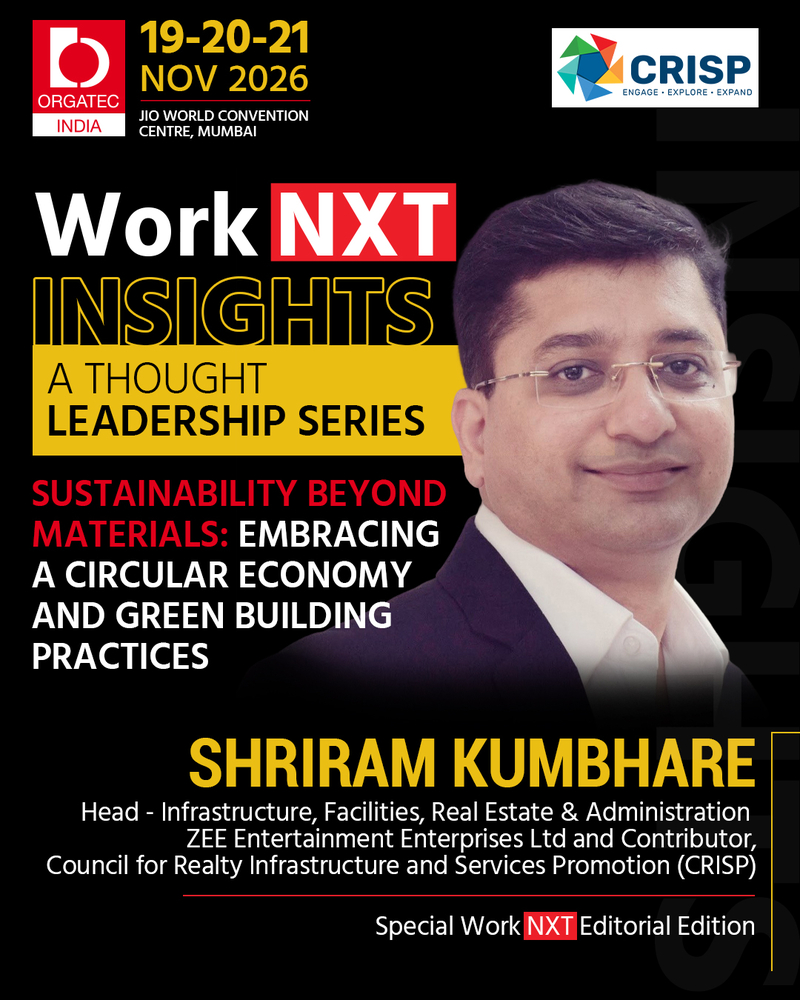
Shriram Kumbhare
Head - Infrastructure, Facilities, Real Estate & Administration, ZEE Entertainment Enterprises Ltd and Contributor, Council for Realty Infrastructure and Services Promotion (CRISP)