


WorkNXT Insights Article
Return to Office: Can Design Make People Want to Come Back?
The workplace of the future is not simply a place where employees come to work. It is a place where people want to come, connect, collaborate, and create value. As organisations redefine their return-to-office strategies, one question becomes increasingly important: Can workplace design make employees want to return?
The answer is yes, provided we look beyond desks, chairs, and meeting rooms.
Today's workforce expects more from the workplace than ever before. Employees value flexibility, comfort, well-being, technology, and meaningful human interaction. A thoughtfully designed office can bring these elements together and transform the employee experience.
The future office must be designed around people, not just operational requirements. Collaborative spaces encourage creativity and teamwork, while quiet zones support focused work. Comfortable breakout areas, natural light, ergonomic furniture, indoor greenery, and well-planned common spaces contribute to a healthier and more engaging environment.
Technology is equally important. Smart meeting rooms, seamless connectivity, efficient visitor management, and automated facility services can make everyday work simpler and more productive. However, technology should enable human interaction, not replace it.
From an administration and facilities management perspective, workplace design must also balance employee experience with cost efficiency, safety, sustainability, and operational excellence. Every square foot should serve a purpose, but that purpose should not be measured only in terms of occupancy or utilisation. It should also be measured by employee satisfaction, collaboration, productivity, and the overall quality of the working environment.
Organisations should increasingly use employee feedback, workplace utilisation data, and service performance indicators to understand what works best. A one-size-fits-all approach may no longer be effective. Flexible spaces that adapt to different teams, working styles, and business needs will become essential.
Ultimately, employees may return to the office because their roles require it, but they will feel motivated to return when the workplace offers something valuable that they cannot easily experience elsewhere: a sense of belonging, opportunities to learn, stronger relationships, and an environment that supports their well-being.
The office of the future will not compete with the comfort of home by offering more space. It will win by offering a better experience. The organisations that recognise this will turn the workplace from a mandatory destination into a genuine competitive advantage.
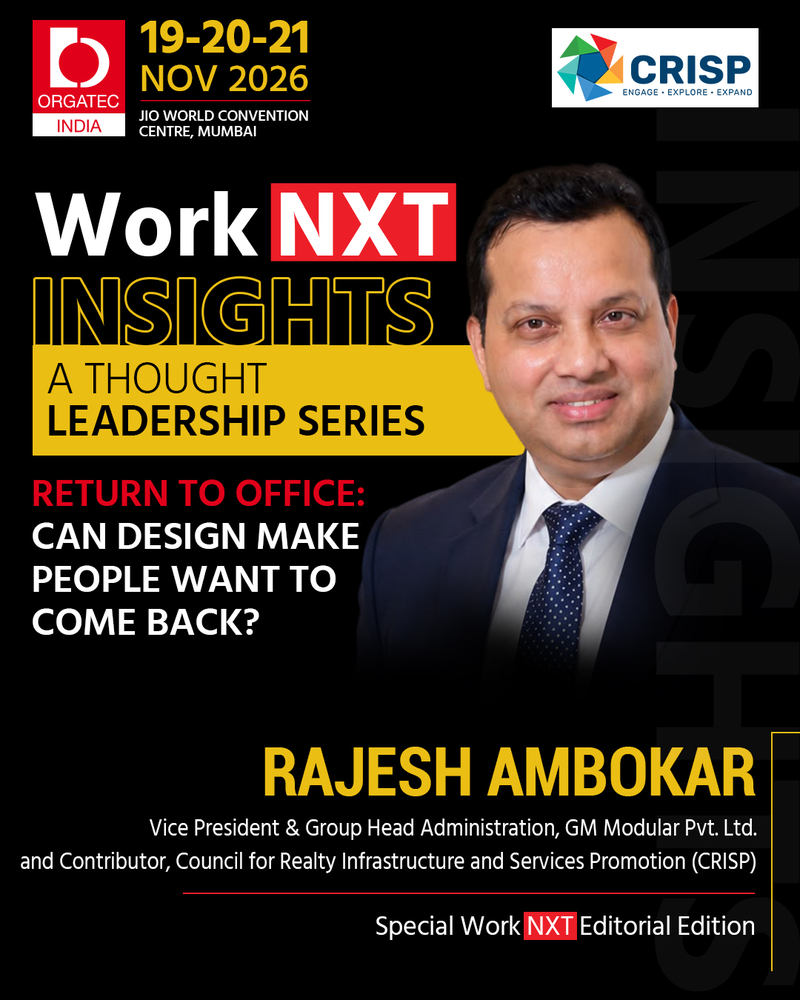
Rajesh Ambokar
Vice President & Group Head Administration, GM Modular Pvt. Ltd. and Contributor, Council for Realty Infrastructure and Services Promotion (CRISP)