



WorkNXT Insights Article
From Managing Buildings to Anticipating Needs: AI’s Next Frontier in Workplace Management
The real promise of Artificial Intelligence (AI) in workplace management is not simply to make buildings smarter. It is to help facility managers identify problems earlier, make better decisions and create workplaces that work better for people.
Traditionally, facilities management has relied on planned maintenance, manual inspections and employee feedback. AI can strengthen these practices by analysing data from Building Management Systems (BMS), sensors, maintenance records and workplace applications. It can flag equipment likely to fail, adjust cooling based on occupancy, schedule cleaning according to actual footfall and forecast food demand to reduce waste.
The bigger opportunity lies in integrated facilities management (IFM). Technical services, housekeeping, security, energy management and food services often operate as separate functions. By connecting data across these areas, AI can help teams coordinate resources, spot emerging issues and improve service delivery. For example, occupancy data can inform cleaning schedules and energy consumption, while maintenance trends can help managers prioritise repairs before they disrupt business operations.
However, adopting AI is not without challenges. Poor-quality data and disconnected systems can lead to inaccurate predictions. Monitoring occupancy also raises legitimate questions about employee privacy. Cybersecurity, implementation costs and overdependence on automated recommendations require equally serious attention. AI should support decisions, not be trusted blindly.
The human factor remains central. A system may identify an unusual pattern, but a facility manager must understand the context, assess the risk and decide what action is appropriate. Organisations will also need to train employees for changing roles, ensuring technology strengthens frontline teams rather than simply adding another layer of complexity.
The facility manager of the future will combine operational experience with data-driven insight, balancing efficiency with safety, comfort and sustainability.
Ultimately, successful AI adoption will not be measured by how much technology a workplace installs, but by whether it prevents disruptions, improves everyday experiences and helps people do their best work.
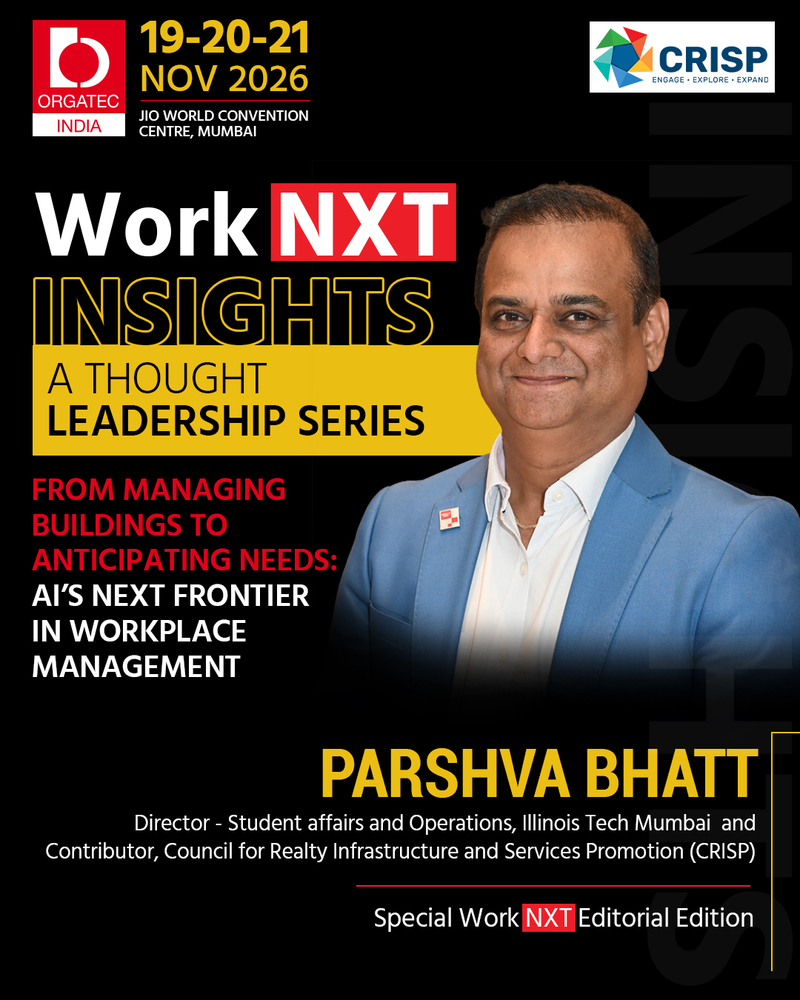
Parshva Bhatt
Director - Student affairs and Operations, Illinois Tech Mumbai and Contributor, Council for Realty Infrastructure and Services Promotion (CRISP)